I
Greater Eurasia
Russia's pivot from a Greater Europe to a Greater Eurasia, and the integration of the continent through new institutions, corridors and partnerships with China, India and others.
Glenn Diesen is a Norwegian professor of political science whose work examines geoeconomics, Russian foreign policy and Eurasian integration. His research traces the transition from a unipolar, Western-centric order to a Eurasian world order, and asks how Europe should position itself within it.

Diesen approaches world politics from a neorealist perspective, with a particular interest in how economic interdependence is used as an instrument of power.
Born in Oslo in 1979, Glenn Diesen has lived and worked in Australia, Ireland, the Netherlands and Russia before returning to Norway. He was educated at the University of Wollongong, the University of Sydney, Saint Petersburg State University and Macquarie University, and completed a joint doctorate at Vrije Universiteit Amsterdam and Macquarie University in 2014.
After lecturing at Macquarie University and serving as a professor at the Higher School of Economics in Moscow, he joined the University of South-Eastern Norway in 2020, where he became full professor in 2021. He is an associate editor of the journal Russia in Global Affairs and sits on several international advisory boards.
Read the full biographyRussia's pivot from a Greater Europe to a Greater Eurasia, and the integration of the continent through new institutions, corridors and partnerships with China, India and others.
How states convert economic interdependence into political power, and how a "balance of dependence" is pursued through strategic industries, transport corridors and financial instruments.
The intellectual roots and contemporary form of Russian conservatism, and its role in managing change in a country shaped by a history of permanent revolution.
Europe as the western peninsula of a greater Eurasian continent, and the choices facing European states between dependence on a single partner and a more diversified security and economic order.
The decline of liberal hegemony and the return of a Westphalian international system with Eurasian characteristics, in which sovereignty and balance of power regain their central place.
The role of narratives, think tanks and the media in international politics, and how the information war shapes the room for diplomacy between Russia and the West.
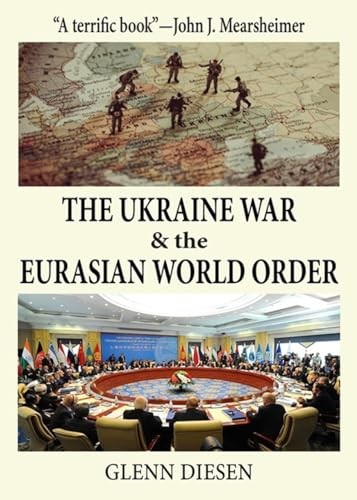
An account of how the war in Ukraine accelerated the end of a Western-centric world order and the consolidation of a multipolar, Eurasian alternative.
The central argument: the decline of liberal hegemony has left the world in an interregnum, from which a Westphalian order is re-emerging with Eurasian characteristics.
Translated into Spanish by Akal in 2025 and discussed with Jeffrey Sachs, Anatol Lieven and others, the book places the conflict within three decades of failed efforts to build an inclusive European security architecture, and argues that a durable peace requires a return to balance-of-power diplomacy.
Security in Europe cannot be built against a major power, only with it. A durable peace requires diplomacy that takes the interests and security concerns of all sides seriously.
The argument that runs through Diesen's books, essays and conversations
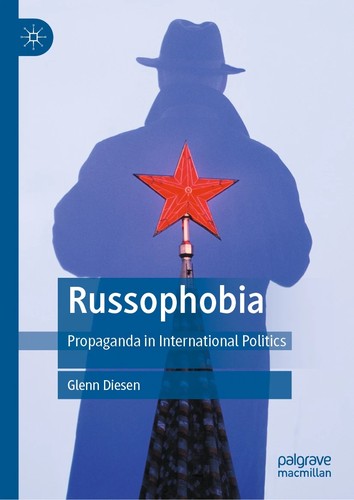
Traces the long history of anti-Russian narratives in the West and asks how they constrain policy today.
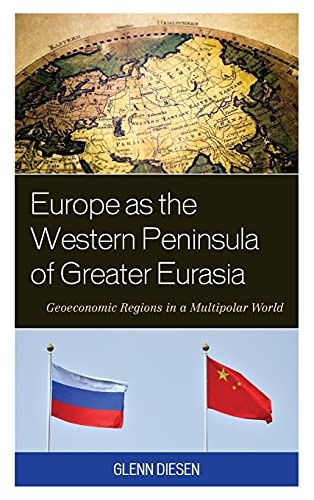
Rethinks Europe's geography and economic future as the centre of gravity moves east.
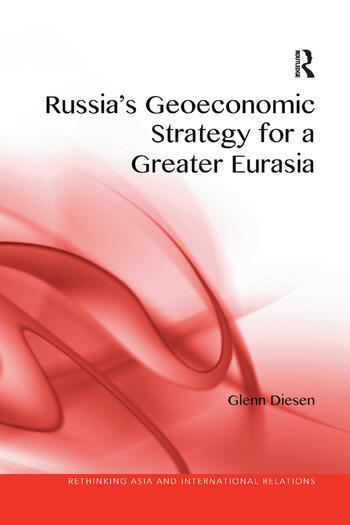
The foundational study of Russia's pivot to Asia, later translated into German.
Essays and interviews on geoeconomics, Russian foreign policy and the emerging world order, delivered to your inbox. Free to read, with the option of a paid subscription to support the work.
Interviews, essays and lectures are published across the platforms below.